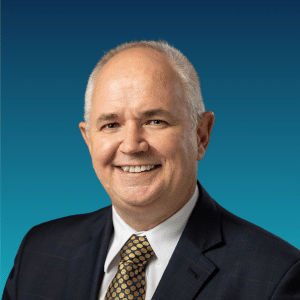
For most retirees, the question of how much money is needed to retire is at the centre of their planning – leading to the general assumption that a large balance is all that’s needed to meet someone’s retirement needs. Aaron Minney, Head of Retirement Income Research at Challenger, says this isn’t enough and retirement planning needs to look beyond balance alone.
Australians experience retirement in different ways, shaped by wealth, confidence, expectations and outlook. Research from the Institute for Lifetime Income found 80% of retirees change their spending in retirement, with people of similar means often making very different choices about spending, saving and living.
This shows that while savings are important, retirement outcomes cannot be understood through account balances alone.
These findings provide important insights for superannuation funds, advisers and policymakers seeking to support Australians through a complex retirement journey.
Four distinct retirement lifestyles
Retirement experiences are not uniform. Instead, the research found, retirees belong to one of four broad lifestyle personas:
- Carefree
- Content
- Cautious, and
- Concerned.
These personas reflect different attitudes towards spending and different levels of confidence.
- Carefree retirees focus on enjoying life. They are more likely to spend on travel, social activities and experiences, and generally report high confidence that they can afford their desired lifestyle.
- Content retirees enjoy a simpler life in retirement and are comfortable spending less than they did while working. Importantly, they do not feel deprived.
- Cautious retirees reduce spending because uncertainty – including concerns about markets, outliving their money and managing unexpected costs – weighs on them.
- Concerned retirees face greater pressure, are more likely to see cutbacks as necessary and are more likely to expect to run out of money. They report the lowest confidence in maintaining their desired living standards.
Significantly, these lifestyles exist across all wealth levels. While higher balances increase the likelihood of a Carefree retirement, financial resources alone do not fully explain behaviour. The research suggests that mindset often plays an equally important role in shaping retirement experiences.
Confidence influences behaviour
One of the strongest themes emerging from the research is the relationship between confidence and spending behaviour.
Most retirees – more than eight in ten – say they are fairly or very confident they can afford their desired lifestyle. However, confidence levels vary between the four lifestyle groups and this has a direct impact on spending decisions.
Confident retirees are more likely to spend on activities and experiences that enhance wellbeing. Those with lower confidence are more likely to reduce spending, even when their circumstances could support more. Uncertainty can lead people to preserve savings rather than use them to support the lifestyle they want today.
This finding highlights an important challenge for Australia’s retirement system: success in retirement cannot be measured solely by the financial amount accumulated before retirement.
The ability to translate those savings into income, financial security and confidence to spend is also critical to a successful retirement.
Retirement spending is dynamic
The Institute for Lifetime Income’s research also found that contrary to common belief, retirement spending does not follow a predictable and consistent path.
Many retirees change their spending over time: 24 per cent spend more than before retirement, while 37 per cent spend less. Some increase spending early, taking advantage of their newfound freedom; others become more conservative as healthcare, aged care or economic uncertainty weigh on their minds.
Predicting these changes is also difficult. Most retirees can only confidently predict their spending needs a few years ahead, and only 11 per cent feel confident looking more than 10 years out. Health, family circumstances, inflation and changing priorities all contribute to these ongoing adjustments.
Advice remains essential after retirement
Retirement planning is not a single event, but an ongoing process requiring review, adaptation and support, and yet the research found 27 per cent of retirees had not received any advice, whether paid or unpaid.
Of those who had received advice, having enough income was consistently what most people had received advice on, followed by investment management and making savings last.The findings also suggested that advice needs evolve over time. For instance, while having enough income remained the top advice need, people asking for help with making their money last became more common over time and guidance on aged care was also highlighted as an area of need.
This creates an opportunity for the superannuation industry to consider how support can be delivered throughout retirement.
Implications for the retirement system
For superannuation funds and policymakers, these findings reinforce the need for a better understanding of retirement behaviour.
Retirees are not a homogeneous group. A communication strategy, retirement solution or engagement approach that resonates with one person may be less effective for another. Understanding differences in confidence, expectations and mindset will be increasingly important as the industry seeks to deliver more personalised retirement support.
The findings also reinforce the importance of helping retirees balance two competing objectives: enjoying life today while remaining prepared for tomorrow. For some, the challenge is overcoming unnecessary caution. For others, it is managing genuine financial constraints.
Australia’s superannuation system is often judged by the size of the balances it produces, but retirement is not lived through an account balance alone – confidence, education and access to appropriate guidance play critical roles.
The research suggests that many retirees can live the lifestyle they want but are uncertain whether they have ‘permission’ to do so. Confidence, not just capital, can determine whether retirement savings translate into retirement wellbeing.
The challenge for policymakers and industry is therefore broader than helping Australians accumulate wealth. It must also help them convert that wealth into confidence, choice and the freedom to live well throughout retirement.
For more information, you can read the full research here.