Nineteen million Australians with super will have greater access to trusted sources of financial advice and will be kept safer from harmful marketing tactics thanks to policy measures announced by Assistant Treasurer and Minister for Financial Services, Dr Daniel Mulino today.
The superannuation sector’s peak body, ASFA, welcomed the announcements in Dr Mulino’s National Press Club address as a balanced response to the conduct that caused the Shield and First Guardian collapses.
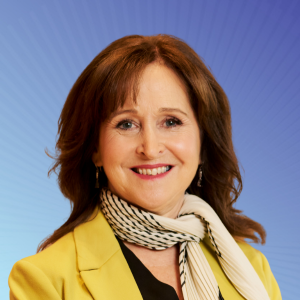
“Banning unlicenced lead generators will help to prevent the harmful conduct that caused the loss of so much money in the Shield and First Guardian cases,” ASFA CEO Mary Delahunty said.
More Australians will be able to access financial advice after Dr Mulino announced progress on financial advice reforms.
The policy package will also begin to fix some design flaws in the Compensation Scheme of Last Resort (CSLR) which Ms Delahunty said had become “fundamentally unsustainable” as it forced Australians in institutional super funds to fund the scheme even though they can’t claim from it themselves.
Preventing consumer harm at the source
ASFA welcomed the policy package’s effective ban on lead generators, the industry that channels people towards financial products through cold calls and high-pressure marketing.
“Restrictions on lead generators and stronger anti-hawking provisions will help prevent some of the harm that we’ve seen at its source: the moment where people are pressured into leaving the relative safety of an institutional fund into a riskier structure,” Ms Delahunty said.
Importantly, legitimate education, advocacy and employer communications about superannuation will still be permitted under the proposed rules.
Supporting consumer choice
Ms Delahunty welcomed measures designed to ensure that Australians who choose to manage their own super funds are fully informed about the legal and financial obligations that come with that choice.
“Choice is a fundamental part of our system, but choice only works when it is well informed. Requiring people to learn what running your own super fund involves before opening an SMSF will ensure people understand the responsibilities and the risks they are taking on.
“Giving the ATO the power to pause a rollover to an SMSF where fraud is suspected is a sensible safeguard for the exact moments when people are most vulnerable to bad actors,” Ms Delahunty said.
More Australians able to get trusted advice
Ms Delahunty welcomed Dr Mulino’s commitment to progressing financial advice reform and said that could not come soon enough, with 2.5 million Australians set to retire over the next decade. ASFA research shows that half of all adults have never consulted any source of advice about retirement.
“Everyday Australians are increasingly excluded from financial advice by high fees and dwindling adviser numbers. Financial advisers play a crucial role, but there are not enough of them.
“Thanks to progress announced today, working Australians will find it simpler and more affordable to access basic financial advice through their super funds,” Ms Delahunty said.
“Progress on these long-awaited reforms will mean super funds can finally answer common questions that Australians ask them each day. Questions like how much they can safely draw down in retirement, how their age pension entitlements will work, or how their various super accounts can be combined to offer them maximum retirement security.”
“Millions of people will get simple but useful help with important financial decisions without having to pay thousands of dollars for comprehensive advice that might be more than what they need or can afford. Simple advice through super funds will not replace the comprehensive advice and planning work that financial advisers do,” Ms Delahunty said.
A fairer compensation scheme
Ms Delahunty also welcomed the announcement of changes to the CSLR, which pays compensation to victims of financial misconduct when all other avenues have been exhausted.
[Independent research commissioned] by ASFA found the CSLR is the only scheme of its kind in the world that is funded in part by the retirement savings of people who cannot claim from it.
“Members of institutional super funds have been helping to pay for a scheme they can never claim from. That was never fair. The principle should be simple: the sectors where the losses occur should fund the compensation.
“Levying SMSFs is a sensible and equitable approach.
“We’re not yet all the way there in terms of savings in institutional super being removed as a source of funding, but this is many steps in the right direction,” Ms Delahunty said.
Ends
Members of the media may contact:
Scott Roberts
Media and Content Lead
sroberts@superannuation.asn.au
0451 949 300
About ASFA
ASFA is the peak policy, research and advocacy body for Australia’s superannuation industry, and the only industry body that represents all parts of the APRA-regulated system.
Our more than 100 members include retail, industry, corporate and public sector funds and their service providers. For over sixty years, ASFA has been the voice of super, advocating for a dignified retirement for all Australians. Through research, advocacy and collaboration, ASFA promotes efficiency, sustainability and trust in Australia’s world-class retirement income system.